Caring for Maple Trees in Minnesota: A Complete Guide
Maple trees are iconic to Minnesota's landscape, providing stunning fall color, shade, and natural beauty. Whether you have a sugar maple in your yard, a red maple by your foundation, or a silver maple offering quick growth, understanding how to care for these trees ensures they thrive for decades. This guide covers everything Minnesota homeowners need to know about maple tree care.
Understanding Minnesota's Maple Species
Minnesota is home to three primary maple species, each with distinct characteristics and care requirements. Sugar maples are the slowest-growing but most prized, famous for their brilliant crimson and gold fall foliage and maple syrup production. They prefer cool climates and well-draining soil, making Minnesota ideal. Red maples are more adaptable and faster-growing, tolerating both wet and dry conditions. Silver maples grow quickly and provide rapid shade but are less cold-hardy than other species and require more maintenance.
Each species has different nutritional needs and pest susceptibilities. Understanding which maple you're growing helps you provide targeted care and prevent common problems.
Seasonal Care and Pruning
Professional tree trimming and pruning is essential for maple tree health. The best time to prune maples in Minnesota is late summer through early fall, after leaves have fully expanded but before severe winter weather arrives. This timing prevents excessive sap bleeding and reduces stress on the tree.
Remove dead, diseased, or crossing branches to improve air circulation and tree structure. Avoid flush cuts—leave the branch collar intact to allow the tree to heal properly. For sugar maples, be cautious about pruning in spring when sap flow is heaviest. Never top your maple trees, as this removes the natural crown and promotes weak, overcrowded branch growth.
Young maples benefit from formative pruning to develop strong structure. Established trees need maintenance pruning every 3-5 years to remove problematic branches and maintain shape.
Maple Syrup Tapping
If you own a sugar maple, you might consider tapping it for syrup production. Minnesota has a strong maple syrup tradition, and tapping is an excellent way to enjoy your tree's bounty. Trees should be at least 12 inches in diameter before tapping. Use proper spiles and collection equipment, and tap only in late winter when daytime temperatures exceed freezing and nighttime temperatures remain below freezing.
Limit tapping to 2-3 spiles per tree, and rotate tapping locations year to year. Proper tapping actually causes minimal harm to healthy, mature sugar maples.
Disease Prevention and Management
Minnesota maples face several diseases that homeowners should monitor. Anthracnose causes brown blotches on leaves and twig dieback, especially in wet springs. Verticillium wilt, a soil-borne fungus, can be fatal to maples. Prevention is key—avoid wounding trees, maintain proper moisture, and remove infected branches promptly.
Pest pressures include aphids, which produce sticky honeydew, and scale insects. These rarely require chemical treatment if the tree is healthy. More serious threats include the Emerald Ash Borer, though it primarily affects ash trees. Keep an eye on your maples for signs of stress or disease, and consult a professional if you notice unusual symptoms.
Fertilization and Soil Care
Maples in Minnesota often thrive without fertilization if they're planted in decent soil. However, urban maples or those in compacted soil may benefit from balanced fertilization in spring. Avoid excessive nitrogen, which promotes weak growth and pest susceptibility.
Maintain a 2-4 inch mulch layer around the base of young maples, extending to the drip line. This retains moisture, moderates soil temperature, and prevents lawn mower damage. Remove mulch several inches from the trunk to prevent fungal issues.
Fall Color and Seasonal Considerations
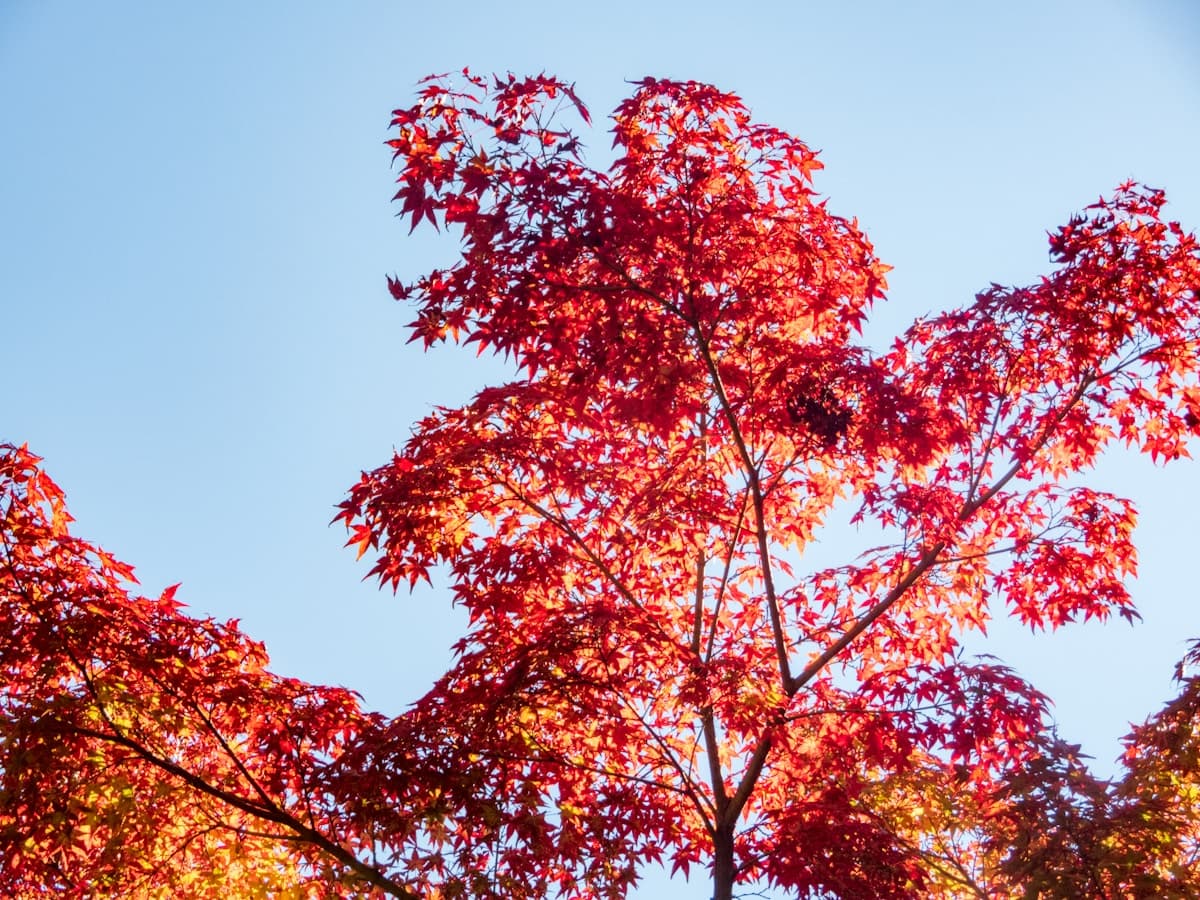
Minnesota's cold nights and warm days create ideal conditions for brilliant fall maple foliage. Sugar maples typically turn red, orange, and yellow in late September through October, depending on weather. Cool, dry conditions produce the most vibrant colors. Red maples often color earlier, sometimes in late August.
In autumn, don't rake up all maple leaves immediately. Leaf litter provides nutrients, insulation for soil organisms, and habitat for beneficial insects. A thin layer of leaves is actually beneficial for tree health.
Winter Care in Minnesota
Minnesota winters are harsh, and protecting young maples is important. Consider tree guards on young trunks to prevent deer damage and sunscald from freeze-thaw cycles. Avoid heavy pruning in late fall, which stimulates new growth vulnerable to frost damage.
Young trees benefit from winter mulch or burlap wrapping in their first few years, especially if they're newly transplanted. Established maples are generally hardy and require no special winter protection.
When to Call a Professional
For complex pruning, disease diagnosis, or large-tree work, professional arborists are invaluable. Learn more about when to hire professionals versus handling tree care yourself. Heavy pruning, crown reduction, or emergency work after storms should always be handled by experienced professionals.
Proper maple tree care ensures these beautiful specimens enhance your Minnesota property for generations. Regular maintenance, timely pruning, and attention to health issues keep your maples thriving. For professional care, contact Holtz Tree Service for a free estimate.
Ready to learn about the best shade trees to plant in Minnesota? Check out our guide to Minnesota's best shade trees for more ideas.