DIY vs Professional Tree Trimming: When to Call an Expert
Tree trimming is a common property maintenance task that many homeowners attempt themselves to save money. While there are certain trimming jobs suitable for DIY approaches, many others should be left to professionals. Understanding the difference between safe do-it-yourself work and tasks that require expert hands is essential for protecting both your safety and your trees' health. Holtz Tree Service helps homeowners in Central Minnesota make informed decisions about their tree care needs.
Safe DIY Tree Trimming Tasks
Not all tree work is dangerous or requires professional equipment. If you have healthy trees with branches less than 10 feet off the ground and are trimming branches smaller than 2-3 inches in diameter, DIY trimming can be appropriate. Tasks in this category include removing dead twigs and branches from lower limbs, clearing branches touching your roof or siding, and removing obviously damaged or diseased small branches.
For these projects, use properly maintained hand tools: sharp pruning shears for branches under 1/2 inch, loppers for branches 1/2 to 1.5 inches, and a pruning saw for larger branches. Never use power tools like chainsaws without proper training and safety equipment. Always cut at the proper angle (about 1/4 inch above the branch collar) and never apply wound dressing, as research shows trees compartmentalize wounds more effectively without it.
Dangers of DIY Tree Trimming
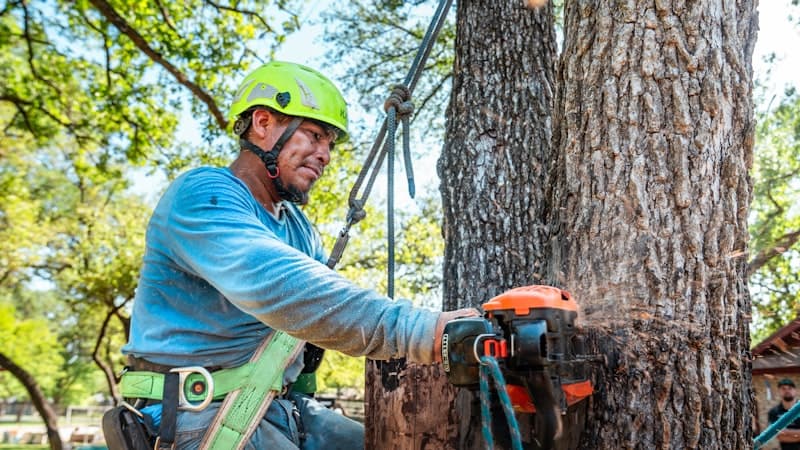
Tree trimming becomes dangerous when branches are high off the ground, when they're near power lines, or when working with large branches. Working at heights requires proper safety equipment—harnesses, ropes, helmets, and climbing experience. Many homeowners lack this equipment and training, creating serious injury or death risks from falls. Additionally, properly securing yourself in a tree while wielding a chainsaw requires specialized knowledge and technique.
Power line contact is another critical danger. Even standing on a ladder with a pruning tool near power lines can cause electrocution. Utility companies recommend maintaining at least 10 feet of clearance from power lines, and working near them should absolutely be left to professionals with proper training and safety protocols. Branches falling unexpectedly can cause injuries, damage property, or land on power lines.
Improper trimming creates additional problems. Many DIYers trim trees too aggressively, damaging the tree's structure and health. Topping trees—cutting the main trunk without proper cuts—creates multiple weak branches, causes the tree to be susceptible to disease, and dramatically reduces the tree's lifespan. Flush cuts that remove the branch collar prevent proper compartmentalization of wounds, inviting disease and pest problems.
When to Hire a Professional
You should call a professional tree trimming service if your trees have branches over 10 feet high, branches over 3 inches in diameter, or if any trimming involves power lines. You should also hire professionals if you're unsure about the tree's health, if you're trimming multiple large trees, or if the work requires climbing or special equipment like lifts.
Dead trees or trees with large dead branches always require professional removal. Dead wood is unpredictable and brittle—it can break unexpectedly during trimming, causing serious injury. If you're unsure whether a branch is dead, let a professional assess it. Additionally, trees near structures, roads, or where property damage could result from dropped branches warrant professional care to minimize liability and ensure proper execution.
Professional Certification and Insurance
When hiring a tree trimming company, verify they employ certified arborists who understand proper pruning techniques and tree biology. Certification from the International Society of Arboriculture (ISA) indicates the arborist has passed comprehensive exams on tree care practices. Insurance is equally critical—ensure the company carries liability insurance and workers' compensation coverage. If someone is injured on your property or your home is damaged during the work, you'll want protection from uninsured contractors.
Professional arborists also understand which branches to remove based on the tree species and health goals. They can improve tree structure, improve views, increase light penetration, and enhance safety while maintaining the tree's long-term health. They know which species tolerate aggressive pruning and which require gentler approaches to avoid damage.
Proper Equipment and Techniques
Professional arborists use specialized equipment designed for safe tree work: climbing harnesses, rope systems, aerial lifts, and properly maintained chainsaws. They know how to make proper pruning cuts that allow the tree to compartmentalize the wound and prevent disease entry. They understand branch structure and how to identify which branches can be safely removed without creating structural weakness.
Beyond equipment, professionals understand tree species-specific needs. Some trees tolerate heavy pruning, while others require light selective pruning. Timing matters too—many trees should be pruned in winter when they're dormant and disease organisms are less active, though some species tolerate summer pruning better. Professional arborists know these nuances and apply them to ensure your trees remain healthy and attractive.
Cost-Benefit Analysis
While professional tree trimming costs more than DIY work, consider the value: proper pruning extends tree lifespan and health, prevents expensive damage from falling branches, and keeps your property insurance from being voided due to negligence. A tree damaged by improper DIY trimming might require expensive corrective work or even removal—much costlier than professional trimming would have been initially.
Need Professional Help?Holtz Tree Service provides expert tree trimming and emergency tree service throughout Central Minnesota, including Sartell. Call us at (612) 600-8513 or request a free estimate today.